
how to draw filetype:pdf
PDFs‚ frequently sought via searches like “how to draw filetype:pdf”‚ present unique challenges and opportunities for artists and designers seeking versatile output formats.
Millions of doodles from platforms like Quick‚ Draw! offer valuable data for machine learning and artistic exploration within the PDF landscape.
Resources like perspective sketching guides and face drawing courses‚ often available as PDF tutorials‚ demonstrate the demand for accessible drawing instruction.
Understanding the Challenge of “Drawing” PDFs
PDFs‚ often searched for with terms like “how to draw filetype:pdf”‚ aren’t inherently designed for direct drawing in the same way as raster-based formats. The core challenge lies in their structure; PDFs primarily function as output mediums‚ optimized for consistent display across platforms‚ rather than interactive canvases.
Unlike programs offering blank digital paper‚ creating “drawings” within a PDF often involves generating vector or raster elements and embedding them. This necessitates utilizing external software – Adobe Illustrator‚ Inkscape‚ or even Pygame for dynamic content – to construct the artwork before exporting to PDF.
Furthermore‚ achieving transparency or complex blending effects can be problematic‚ as the pygame.draw module‚ for example‚ doesn’t natively support blending.
The Unique Nature of PDF as an Output Format
PDFs (Portable Document Format) excel as a final presentation format‚ stemming from searches like “how to draw filetype:pdf” for finished artwork. Their strength lies in preserving formatting and visual fidelity across diverse devices and operating systems‚ making them ideal for sharing and printing.
However‚ this focus on output means PDFs aren’t inherently editable like native drawing files. They can contain both vector and raster graphics‚ but modifying them often requires specialized PDF editing software.
The PDF format’s suitability for archiving and distribution‚ coupled with the vast dataset of doodles from platforms like Quick‚ Draw!‚ highlights its role as a repository for visual information.
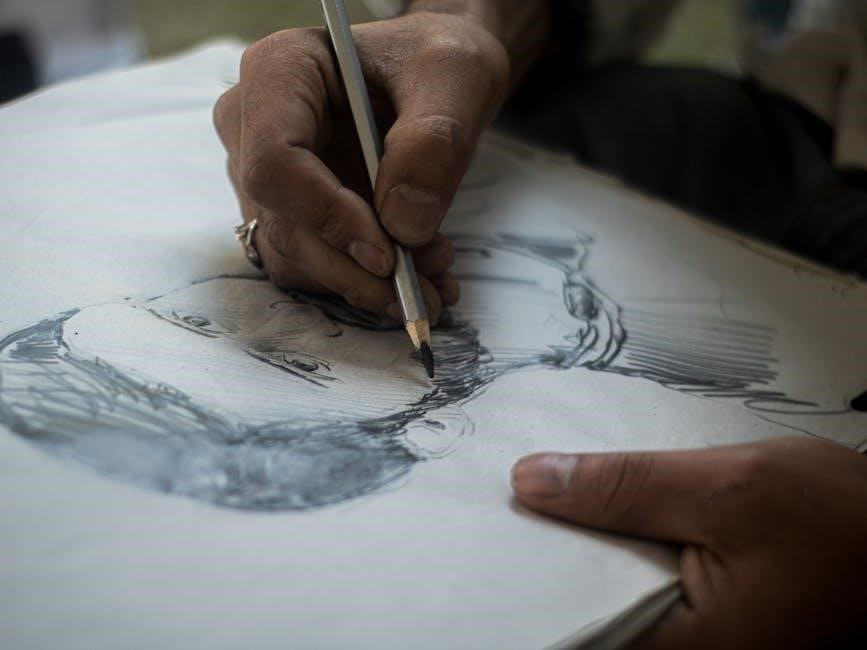
Software Options for Creating PDF Drawings
Adobe Illustrator‚ Inkscape (free and open-source)‚ and CorelDRAW are powerful tools for generating vector-based PDF drawings‚ addressing needs found in “how to draw filetype:pdf” searches.
Adobe Illustrator for Vector-Based PDF Drawings
Adobe Illustrator stands as an industry-standard for creating scalable vector graphics‚ ideal for PDF drawings. Users searching “how to draw filetype:pdf” often require precision and quality‚ which Illustrator delivers. Its robust tools allow for intricate line work‚ shape manipulation‚ and complex color schemes.
Illustrator’s ability to handle layers efficiently is crucial for organizing complex artwork. The software excels at creating illustrations suitable for both web and print‚ ensuring high-resolution output within the PDF format. Furthermore‚ Illustrator’s compatibility with other Adobe products streamlines workflows for designers.
Its features support professional-grade artwork‚ making it a top choice for detailed PDF-based illustrations.
Inkscape: A Free and Open-Source Alternative
Inkscape provides a powerful‚ cost-effective solution for those seeking to create vector graphics and PDF drawings‚ especially for users searching “how to draw filetype:pdf” without a subscription. As a free and open-source alternative to Adobe Illustrator‚ it offers a comprehensive suite of drawing tools.
Inkscape supports complex shapes‚ layering‚ and various color models‚ enabling the creation of high-quality illustrations suitable for PDF export. While the learning curve may be slightly steeper than some commercial software‚ its extensive community support and tutorials are readily available.
It’s a viable option for both beginners and experienced designers.
CorelDRAW: Professional Vector Graphics Suite
CorelDRAW stands as a robust‚ professional-grade vector graphics suite‚ frequently utilized by designers needing precise control over their artwork for PDF creation‚ often sought when searching “how to draw filetype:pdf”. It excels in creating scalable graphics‚ making it ideal for illustrations‚ logos‚ and technical drawings destined for PDF output.
The software offers advanced features like node editing‚ gradient fills‚ and pattern creation‚ ensuring high-quality results. CorelDRAW’s compatibility with various file formats and its streamlined workflow make it a popular choice for professional artists.
It provides extensive tools for PDF optimization.

Basic Drawing Techniques for PDF Creation
Fundamental skills‚ explored through searches like “how to draw filetype:pdf”‚ include mastering line work‚ shape manipulation‚ and effective coloring techniques for scalable PDF graphics.
These basics form the foundation for more complex PDF illustrations.
Line Work and Stroke Weights
Line quality is paramount when creating PDF drawings‚ often researched via queries like “how to draw filetype:pdf”. Varying stroke weights dramatically impacts visual hierarchy and aesthetic appeal.
Thicker lines can define outlines and emphasize key elements‚ while thinner lines are ideal for details and subtle shading. Experimentation with line styles – dashed‚ dotted‚ or textured – adds visual interest.
Vector-based software (like Illustrator or Inkscape) allows for non-destructive editing of stroke weights‚ ensuring scalability without loss of quality within the PDF format. Consistent line work contributes to a polished‚ professional appearance.
Shape Creation and Manipulation
Fundamental to drawing‚ especially when seeking “how to draw filetype:pdf” tutorials‚ is mastering shape creation. Vector graphics‚ commonly used for PDFs‚ excel in this area‚ allowing for precise and scalable shapes.
Basic shapes – circles‚ squares‚ triangles – form the building blocks of more complex illustrations. Manipulation tools within software like Illustrator or Inkscape enable reshaping‚ resizing‚ and rotating these forms.
Boolean operations (union‚ subtract‚ intersect) combine shapes to create intricate designs. Efficient shape manipulation is crucial for creating clean‚ professional PDF drawings.
Coloring and Filling Techniques
When exploring “how to draw filetype:pdf”‚ mastering coloring and filling is essential. Vector-based PDFs allow for solid color fills‚ gradients‚ and patterns‚ offering diverse aesthetic options.
Software like Adobe Illustrator and Inkscape provide tools for selecting colors using various models (RGB‚ CMYK‚ HSB). Gradients add depth and dimension‚ while patterns introduce texture and visual interest.
Consider color palettes and harmonies for visually appealing results. Proper color management ensures consistency across different devices and printing processes within the PDF format.

Advanced Drawing Techniques for PDF
PDF drawings benefit from layering for complex compositions‚ utilizing gradients and patterns for depth‚ and integrating text effectively—skills honed through “how to draw filetype:pdf” searches.
Layering and Organization
Layering is crucial when creating sophisticated PDF drawings‚ allowing for non-destructive editing and complex compositions. Think of layers as transparent sheets stacked on top of each other; each containing individual elements. This organization‚ often sought when exploring “how to draw filetype:pdf” tutorials‚ enables selective visibility‚ modification‚ and rearrangement without affecting other parts of the artwork.
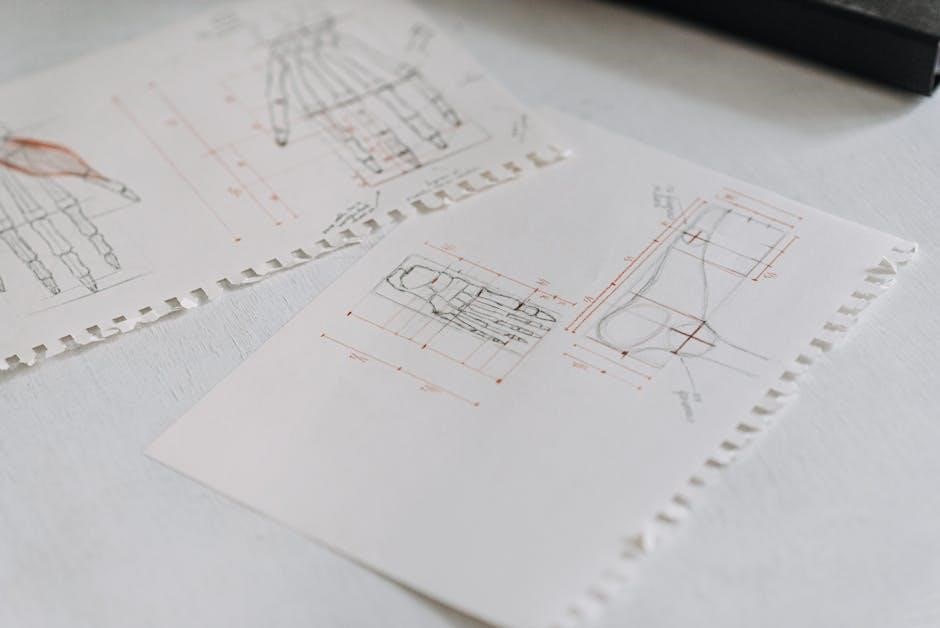
Proper layer naming and grouping are essential for maintaining clarity‚ especially in intricate projects. Software like Adobe Illustrator and Inkscape provide robust layer management tools. Utilizing layers effectively streamlines the workflow‚ making revisions and experimentation significantly easier‚ ultimately enhancing the final PDF output’s quality and flexibility.
Using Gradients and Patterns
Gradients and patterns elevate PDF drawings beyond flat colors‚ adding depth and visual interest. When searching “how to draw filetype:pdf”‚ you’ll find many examples showcasing these techniques. Vector-based software like Adobe Illustrator and CorelDRAW excel at creating smooth gradients and repeatable patterns‚ ensuring scalability without loss of quality within the PDF format.
Experimenting with different gradient types – linear‚ radial‚ and freeform – can dramatically alter the mood and style of your artwork. Patterns‚ whether custom-designed or pre-made‚ can be used for textures‚ backgrounds‚ or decorative elements‚ enriching the overall aesthetic of the final PDF drawing.
Working with Text in PDF Drawings
Integrating text into PDF drawings‚ often explored when searching “how to draw filetype:pdf”‚ adds informative or artistic elements. Vector graphics editors allow for precise text manipulation – font selection‚ size‚ kerning‚ and leading – ensuring readability and visual harmony. Text can be styled with outlines‚ fills‚ and effects to complement the artwork.
Consider text as a design element itself‚ experimenting with different layouts and orientations. PDF supports embedded fonts‚ guaranteeing consistent appearance across different viewing platforms. Properly formatted text enhances the clarity and impact of your PDF drawing‚ making it more engaging and professional.

Leveraging Pygame for Dynamic PDF Content (Image Integration)
Pygame facilitates dynamic PDF content by loading and manipulating images‚ then converting surfaces to PDF format—a technique useful when exploring “how to draw filetype:pdf”.
Loading Images into Pygame
Pygame offers straightforward methods for incorporating image assets into your projects‚ crucial when aiming to create dynamic PDF drawings based on searches like “how to draw filetype:pdf”. The pygame.image.load function is central to this process‚ accepting file paths to various image formats—including PNG‚ JPG‚ and GIF—as input.
Successfully loading an image requires ensuring the file path is correct and that Pygame has the necessary permissions to access the file. Once loaded‚ the image is represented as a Pygame Surface object‚ ready for manipulation and rendering. This surface can then be blitted (drawn) onto other surfaces‚ forming the basis of your visual content before PDF conversion.
Handling potential errors during image loading is also vital for robust applications.
Blitting Images onto a Surface
Once images are loaded as Pygame Surfaces‚ the blit method becomes essential for transferring them onto a displayable surface‚ a key step when creating visuals for “how to draw filetype:pdf” projects. Blitting‚ short for “block image transfer‚” efficiently copies the pixel data from one surface to another.
The blit function requires the source surface (the image) and a destination surface (e.g.‚ the screen) along with a position tuple (x‚ y) specifying where to place the image. Understanding coordinate systems is crucial for accurate placement. Note that direct transparency isn’t supported with the basic pygame.draw module.
This process builds the visual composition before eventual PDF conversion.
Converting Pygame Surfaces to PDF
Transforming Pygame creations into PDF format‚ relevant for “how to draw filetype:pdf” outputs‚ requires bridging the gap between real-time rendering and static document generation. Direct conversion isn’t built into Pygame; therefore‚ intermediate steps are necessary.
A common approach involves rendering the Pygame surface to an image file (like PNG) and then utilizing a PDF library (e.g.‚ ReportLab) to embed that image within a PDF document. Alternatively‚ rasterizing the surface and utilizing image-to-PDF converters can achieve the desired result.
Careful consideration of image resolution is vital for quality.

Utilizing Neural Networks and Doodling Data
Neural networks‚ trained on datasets like Quick‚ Draw!‚ can learn and replicate drawing styles‚ offering innovative possibilities for generating content within PDF files.
Quick‚ Draw! Dataset and Machine Learning
Google’s Quick‚ Draw! game has amassed an extraordinary dataset of over 15 million user-submitted doodles‚ representing a diverse range of drawing interpretations across numerous categories. This publicly available resource is invaluable for machine learning research‚ specifically in the realm of recognizing and generating drawings.
Developers can leverage this data to train neural networks to identify patterns in how people visualize concepts‚ potentially automating drawing tasks or creating AI-assisted art tools. The dataset’s scale and variety make it ideal for improving the accuracy and creativity of machine learning models focused on visual representation‚ impacting PDF creation workflows.
Researchers are actively exploring how this data can reveal cross-cultural differences in drawing styles and inform new artistic approaches.
Applying Neural Networks to Drawing Styles
Neural networks‚ trained on datasets like Quick‚ Draw!‚ can learn to mimic and even generate distinct drawing styles. By analyzing the variations in how users depict objects‚ these models can identify characteristic features – line weight‚ shading techniques‚ and overall composition – associated with different artistic approaches.
This capability opens exciting possibilities for automating the creation of PDF-based illustrations in specific styles. Imagine generating technical diagrams with a hand-drawn aesthetic or producing personalized artwork based on a user’s preferred drawing manner. The potential extends to creating unique visual content for PDF documents.
Further research focuses on controlling the level of stylistic influence applied by the network.
Generating Drawings from Data
The vast Quick‚ Draw! dataset‚ comprising millions of user-submitted doodles‚ provides a rich foundation for generating drawings algorithmically. Neural networks can learn to translate data points – representing user input or external information – into visual representations suitable for inclusion in PDF documents.
This process moves beyond simple replication of existing drawings; it enables the creation of novel imagery based on underlying patterns. For example‚ data regarding object characteristics could be used to automatically generate schematic diagrams or illustrations for technical manuals‚ all output as vector graphics within a PDF.
This automated generation streamlines content creation.

Step-by-Step Drawing Guides and PDF Tutorials
PDF tutorials‚ like those for drawing faces or books‚ offer structured learning. Searches for “how to draw filetype:pdf” reveal numerous accessible guides for all skill levels.
These resources break down complex subjects into manageable steps‚ fostering artistic development and providing clear visual instruction.
Drawing Faces: Proportions and Techniques
Learning to draw faces effectively often begins with understanding fundamental proportions‚ readily available in PDF guides found through searches like “how to draw filetype:pdf”. These tutorials emphasize establishing a base structure‚ typically starting with an oval shape for the head and utilizing guidelines to map out the placement of eyes‚ nose‚ and mouth.
Key techniques include accurately measuring the distances between facial features and recognizing the average ratios found in human anatomy. PDF courses often detail how to simplify complex forms into basic shapes‚ aiding in achieving realistic representations. Mastering these foundational skills is crucial for capturing likeness and expression.
Furthermore‚ understanding light and shadow is vital‚ and many PDF resources demonstrate shading techniques to add depth and dimension to facial drawings.
Drawing Books: Simple Tutorials
Numerous resources offering simple drawing tutorials are available in PDF format‚ easily discoverable with searches like “how to draw filetype:pdf”. These often focus on breaking down complex subjects into manageable steps‚ ideal for beginners. Many tutorials concentrate on drawing everyday objects – books‚ for example – utilizing basic shapes and lines.
PDF guides frequently emphasize the importance of practice and observation‚ encouraging users to study real-life references. They often include step-by-step illustrations‚ clearly demonstrating each stage of the drawing process.
Resources like “How to Draw a Book” tutorials provide accessible learning‚ fostering confidence and skill development in aspiring artists.
Accessing and Utilizing PDF Drawing Courses
A wealth of PDF drawing courses can be found online‚ often stemming from searches like “how to draw filetype:pdf”. These courses range from beginner-level introductions to specialized techniques‚ such as face drawing with proportional guides. Many are available for free download‚ offering accessible art education.
Utilizing these PDF courses effectively requires a dedicated practice schedule and a willingness to experiment. Courses often include exercises and assignments to reinforce learning.
Students can benefit from supplementing PDF instruction with online video tutorials and real-world observation.
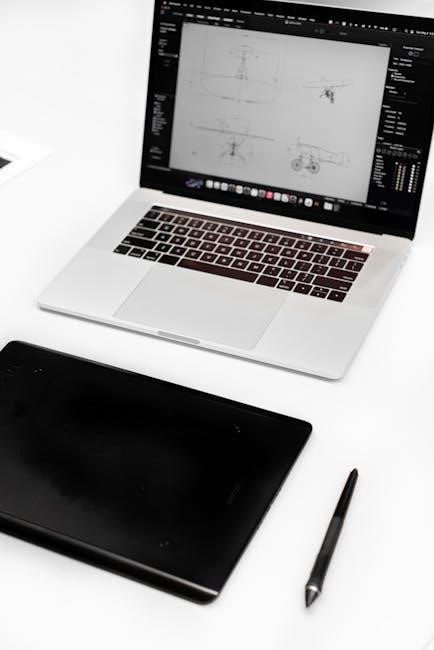
OpenGL and Line Drawing for PDF Generation
OpenGL enables efficient 2D and 3D line rendering in C++ using libraries like GLM‚ facilitating the creation of vector-based graphics for PDF output.
Batching lines optimizes rendering performance‚ crucial for complex drawings.
Batching Lines for Efficient Rendering
Batching significantly improves performance when generating PDF line drawings with OpenGL. Instead of sending individual line drawing commands to the graphics pipeline‚ vertices are stored in a list and rendered in a single call.
Since lines are fundamentally defined by two points‚ this approach is highly feasible. Accumulating vertex data minimizes overhead associated with repeated state changes‚ a common bottleneck in rendering. This technique is particularly beneficial when dealing with numerous lines‚ as often required when converting sketches or diagrams to PDF format.
Effectively‚ it transforms many small operations into one larger‚ more efficient operation.
Drawing 2D and 3D Lines in C++ with GLM
OpenGL‚ combined with the GLM (OpenGL Mathematics) library‚ provides a robust framework for drawing lines in both 2D and 3D spaces‚ crucial for PDF generation. GLM simplifies vector and matrix operations‚ essential for defining line endpoints and transformations.
Implementing line drawing involves storing vertex data – the start and end points – and utilizing OpenGL functions to render these lines. This approach allows for precise control over line properties‚ such as thickness and color‚ ultimately contributing to high-quality PDF outputs.
The combination enables efficient and flexible line rendering.
Converting Existing Images to PDF
Images can be readily converted to PDF using image editing software or online converters‚ optimizing for size and ensuring compatibility with various “how to draw filetype:pdf” needs.
Using Image Editing Software
Image editing software‚ like Adobe Photoshop or GIMP‚ provides robust tools for preparing visuals for PDF conversion. These programs allow for resizing‚ color correction‚ and optimization – crucial steps when dealing with “how to draw filetype:pdf” projects.
You can directly export images as PDF files from these applications‚ often with options to control compression levels and image quality. This ensures a balance between file size and visual fidelity. Furthermore‚ layering capabilities within these editors enable complex compositions before final PDF creation.
Consider using appropriate color profiles (like sRGB) for consistent rendering across different devices and viewers.
Online Image to PDF Converters
Numerous online image to PDF converters offer a quick solution for those searching “how to draw filetype:pdf” and needing to compile drawings into a single document. These web-based tools typically support common image formats like JPEG‚ PNG‚ and GIF.
Popular options often allow batch conversion‚ merging multiple images into one PDF. While convenient‚ be mindful of file size limitations and potential privacy concerns when uploading sensitive artwork. Always review the converter’s terms of service.
These converters are ideal for simple conversions‚ but may lack advanced features found in dedicated software.
Optimizing Images for PDF Size
When creating PDF drawings from images‚ especially after searching “how to draw filetype:pdf” and generating digital art‚ file size optimization is crucial. Large images can significantly inflate the PDF‚ impacting sharing and printing.
Reduce image resolution to the minimum acceptable for your intended use. Employ image compression techniques (JPEG for photos‚ PNG for graphics) during the conversion process. Removing unnecessary metadata can also trim file size.
Consider using vector graphics whenever possible‚ as they scale without losing quality and generally result in smaller PDF files.

PDF Specific Considerations
PDFs support both vector and raster graphics‚ impacting scalability and file size; security features control permissions‚ while optimization balances web/print quality.
Vector vs. Raster Graphics in PDFs
PDFs uniquely accommodate both vector and raster graphics‚ each suited for different drawing applications. Vector graphics‚ created in programs like Illustrator or Inkscape‚ utilize mathematical equations to define shapes‚ ensuring scalability without loss of quality – ideal for logos and illustrations. Conversely‚ raster graphics‚ composed of pixels‚ are better for complex images like photographs.
Choosing between them impacts file size and editing flexibility. Vector PDFs generally have smaller file sizes and are easily editable‚ while raster PDFs can become pixelated when enlarged. Understanding this distinction is crucial when creating “how to draw filetype:pdf” content‚ optimizing for intended use.
PDF Security and Permissions
PDF security features are vital when distributing “how to draw filetype:pdf” tutorials or original artwork. Permissions can restrict actions like printing‚ copying‚ or editing‚ protecting intellectual property. Password protection adds another layer‚ controlling access to the document entirely.
However‚ overly restrictive security can hinder legitimate use. Balancing protection with accessibility is key. Consider whether users need to print practice sheets or annotate the tutorial. Understanding PDF security options ensures your creative work is both shared and safeguarded effectively.
PDF Optimization for Web and Print
Optimizing “how to draw filetype:pdf” documents is crucial for both online viewing and high-quality printing. For web use‚ reducing file size through image compression and removing unnecessary elements improves loading speed. Print optimization focuses on resolution – ensuring sufficient DPI for sharp lines and details.
Vector graphics generally scale better for print‚ while raster images require careful resolution management. Striking a balance between visual fidelity and file size is essential for a positive user experience‚ whether viewing on a screen or producing a physical copy.
Leave a Reply
You must be logged in to post a comment.